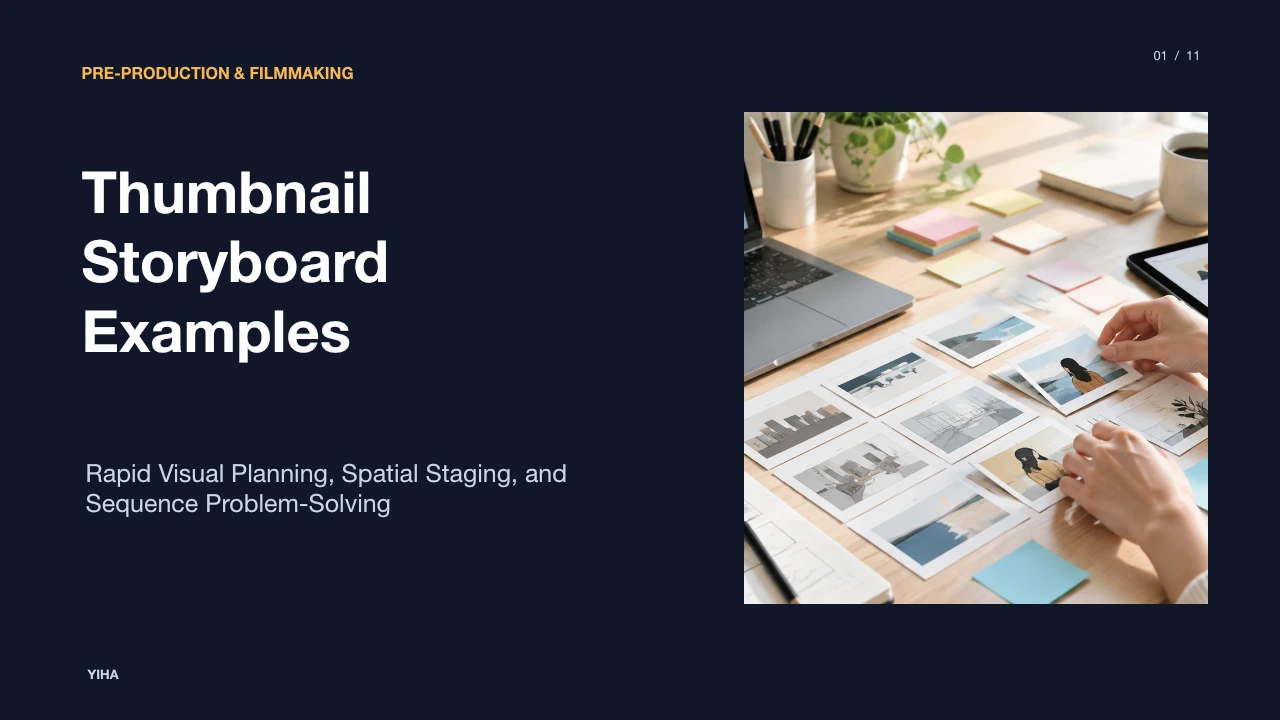
Thumbnail Storyboard Examples
A comprehensive guide to thumbnail storyboard examples, examining rapid composition testing, spatial orientation, movement shorthand, and pre-production iteration.
Free download · 4.9 MB11 editable slides · PowerPoint format
Download the editable PPTX
PPTX · 4.9 MB · 11 editable slides · Free to edit and reuse with attribution to Yiha.ai
View every slide
Use ← →, Home/End, or swipe on mobile
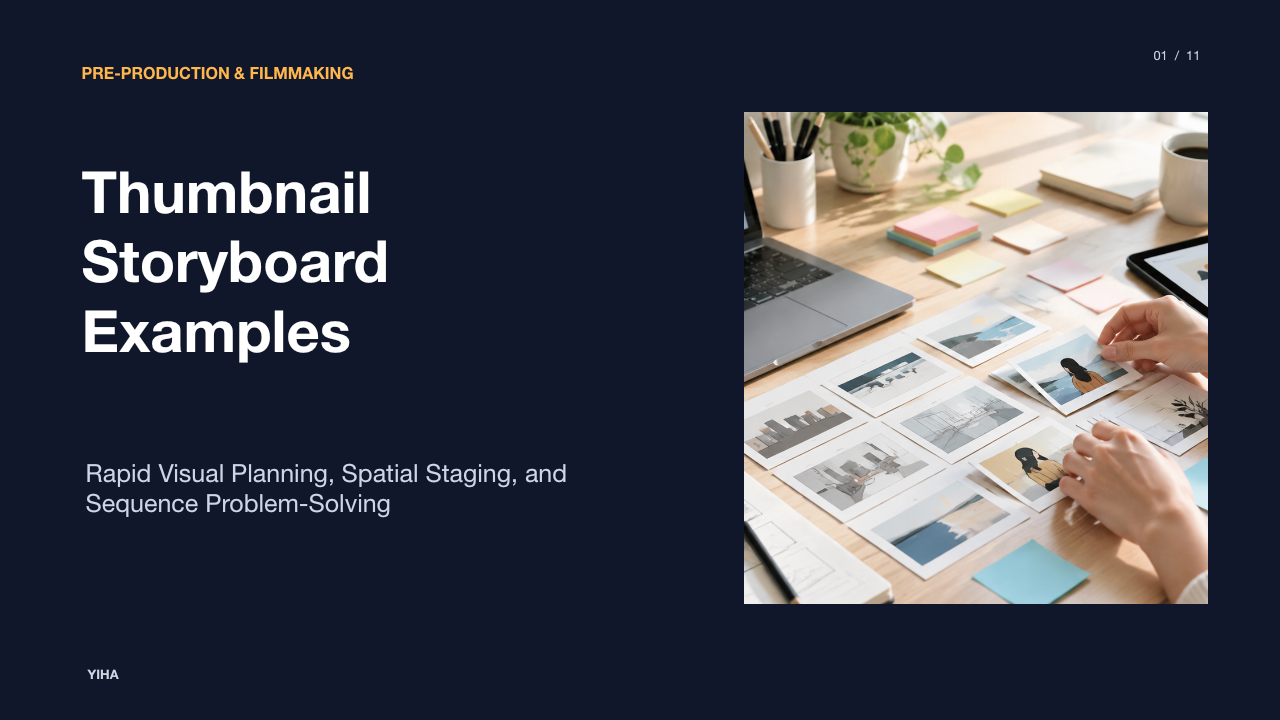
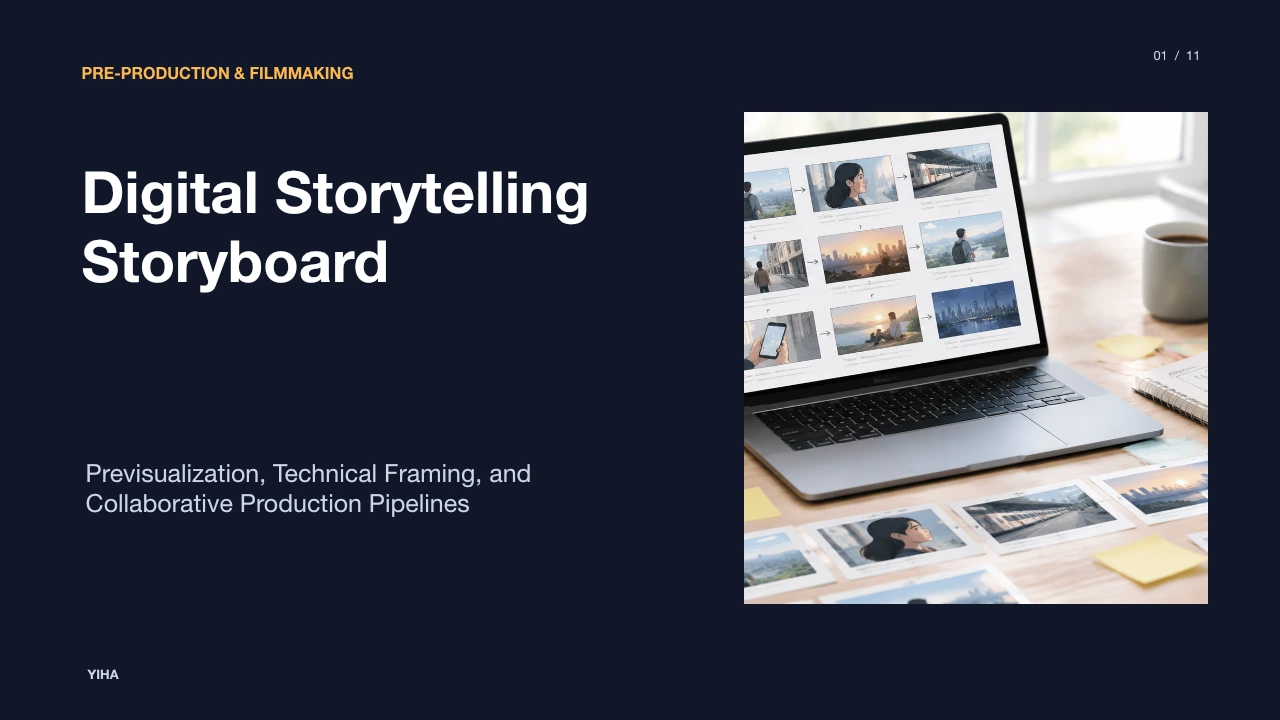
Thumbnail storyboards represent the earliest visual translation of a script or narrative concept. Before directors, cinematographers, and production teams invest significant resources into comprehensive shooting boards, camera equipment, or digital animatics, thumbnail sketches provide an economical sandbox for testing scene staging, shot flow, and spatial logic. Far from being decorative illustrations, functional thumbnails prioritize compositional clarity, editorial rhythm, and immediate visual readability across sequential cuts.
The Strategic Role of Thumbnail Storyboarding
Thumbnail storyboards operate as rapid thinking tools rather than polished client presentations. As outlined in the pre-production guide on What Is a Thumbnail Storyboard? A Clear Guide, a thumbnail storyboard consists of small, rough sketches measuring roughly one or two inches each that map out scene action shot by shot. Because panels remain tiny and unpolished, artists and directors can explore multiple camera angles, shot order variations, and pacing choices in minutes without developing psychological attachment to labor-intensive linework.
In commercial and advertising workflows, this rapid exploration is vital for aligning creative teams before filming begins. The analysis in 10 Best TV Commercial Storyboard Examples in Advertising illustrates how thumbnail sequences prioritize layout and speed over granular detail, allowing creative teams to evaluate whether an entire narrative beat functions within compressed commercial runtimes. Rather than settling for the first visual concept that comes to mind, creators use disposable panels to discover optimal framing choices cheaply before committing to full-scale pre-production assets.
Anatomy of a Functional Thumbnail Panel
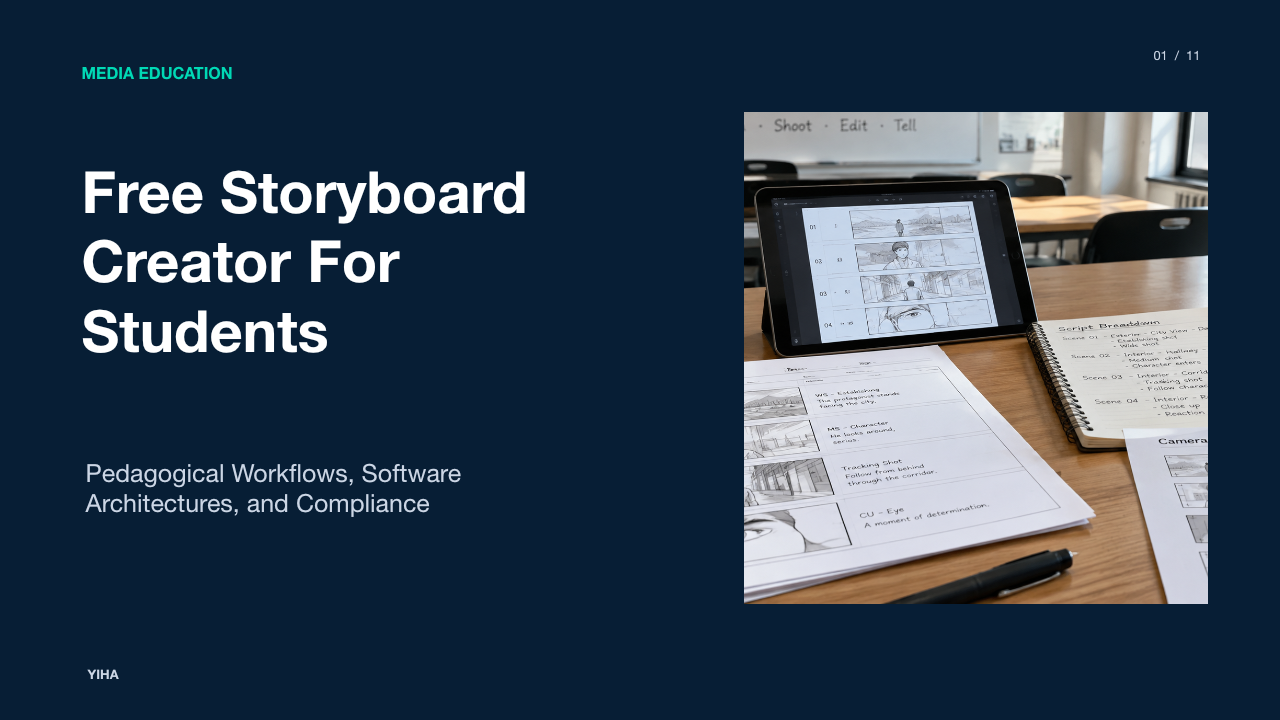
A functional thumbnail panel isolates the core structural components of a cinematic frame. According to the Thumbnail Sketch Guide: Fast Fixes for Broken Sequences, establishing an accurate aspect ratio before drawing any figure is mandatory. Whether a project delivers in standard widescreen 16:9, theatrical 2.39:1, or vertical formats such as 9:16, drawing inside uncalibrated boxes produces compositions that fail when scaled to production viewports.
Beyond proportional boundaries, an effective panel requires only three or four primary shapes, a horizon line, and readable staging. Characters can be represented through minimalist silhouettes or simple geometric figures. What matters is the camera height, the placement of focal points, and the relationship between subjects and their physical environment. As emphasized in the Storyboard Examples Ultimate Guide in 2025, rudimentary stick figures and basic bounding boxes satisfy production needs as long as they communicate shot intentions, blocking, and lens framing to the crew.
Maintaining Spatial Orientation and the 180-Degree Rule
One of the most consequential functions of sequence thumbnailing is detecting continuity errors and spatial confusion before filming commences. The standard 180-degree rule dictates that camera setups must stay on one side of an imaginary axis connecting two interacting characters to maintain consistent screen direction. As detailed in the Storyboard Examples Ultimate Guide in 2025, jumping across this line causes characters to appear as though they are facing the same direction rather than looking at each other, disorienting viewers.
Thumbnail boards serve as an early geographic audit. By pairing sequential sketches with top-down floor plans, as referenced in the practical sequence studies from Filmmaking Basics/Thumbnail Storyboard/Examples - Wikiversity, directors map subject positions against prospective camera placements. Testing eyelines and screen exits in low-fidelity panels exposes broken spatial geography immediately, preventing costly reshoots on set.
Comparative Scene Openings in Practice
Evaluating how a scene begins demonstrates the investigative power of thumbnailing. Rather than committing to a single opening convention, directors draft multiple thumbnail permutations to evaluate dramatic tone and narrative information delivery. In the instructional material from Filmmaking Basics/Thumbnail Storyboard/Examples - Wikiversity, multiple options for an identical opening beat are systematically examined:
- Establishing Wide Setup: The sequence opens with a wide environmental frame showing two characters viewing a theater poster, followed by an inward camera move to reveal subject details and dialogue.
- Character Insert First: The sequence initiates on a tight reaction shot of a character looking intently off-screen, cutting to an insert of the poster before establishing the broader space.
- Subject Detail Reveal: The sequence begins directly on the poster graphic, pulling back via a reverse dolly move to introduce the conversing characters.
As explained in Thumbnail Storyboard vs. Storyboard: Portfolio Guide, exploring distinct visual approaches at the thumbnail stage ensures filmmakers do not settle for predictable staging, but instead select the cut order that best serves the scene's emotional rhythm.
Indicating Dynamic Camera and Character Movement
Because thumbnails are static, small-scale drawings, capturing dynamic camera moves and blocking requires concise visual notation. The methodology highlighted in What Is a Thumbnail Storyboard? A Clear Guide encourages the use of directional arrows inside or across panels to express subject velocity and camera operation instead of drawing redundant intermediary panels.
According to the Thumbnail Sketch Guide: Fast Fixes for Broken Sequences, directional arrows also clarify ambiguous eyelines and intended focal paths. For complex camera trajectories, such as tracking dollies, pans, or zooms, filmmakers draw floating frame borders within a panel or use directional vectors pointing toward intended endpoints. Accompanied by minimal caption notes specifying the camera move, these quick graphical devices communicate kinetic intent without slowing down the brainstorming phase.
Silhouette and Three-Tone Value Readability
A common failure in early storyboarding is relying on detailed interior linework to explain who a character is or what they are doing. The Thumbnail Sketch Guide: Fast Fixes for Broken Sequences stresses the importance of the two-second read: an observer should understand the action immediately from outer silhouettes alone. If an action collapses into an unrecognizable clump when reduced to a flat dark shape, no amount of detailed hatching or facial rendering will clarify the beat on screen.
To establish depth and atmosphere, artists employ a strict three-tone value system containing only light, midtone, and dark values. Flatly blocking shapes using these three values tests whether the subject separates cleanly from the background and foreground elements. If a scene fails to communicate depth under this three-tone limit, the staging itself requires repositioning rather than decorative rendering.
Speed and Iteration Benchmarks in Visual Problem-Solving
The fundamental metric of successful thumbnailing is velocity. The practical instruction in the Thumbnail Sketch Guide: Fast Fixes for Broken Sequences recommends maintaining strict sketching intervals between 30 seconds and 2 minutes per panel. Spending longer on an exploratory sketch indicates that an artist has transitioned from narrative problem-solving into premature illustration.
When confronting difficult sequence transitions, artists generate five to ten rapid thumbnail variations to stress-test coverage options. Following this generative sprint, a two-pass evaluation system is applied: first, eliminating redundant sketches or those requiring verbal explanation, and second, advancing the top two candidate compositions for refinement. As noted in Thumbnail Storyboard vs. Storyboard: Portfolio Guide, this disciplined approach prevents creative stagnation and ensures that production choices are vetted against multiple staging alternatives.
Translating Thumbnails into Production Boards and Animatics
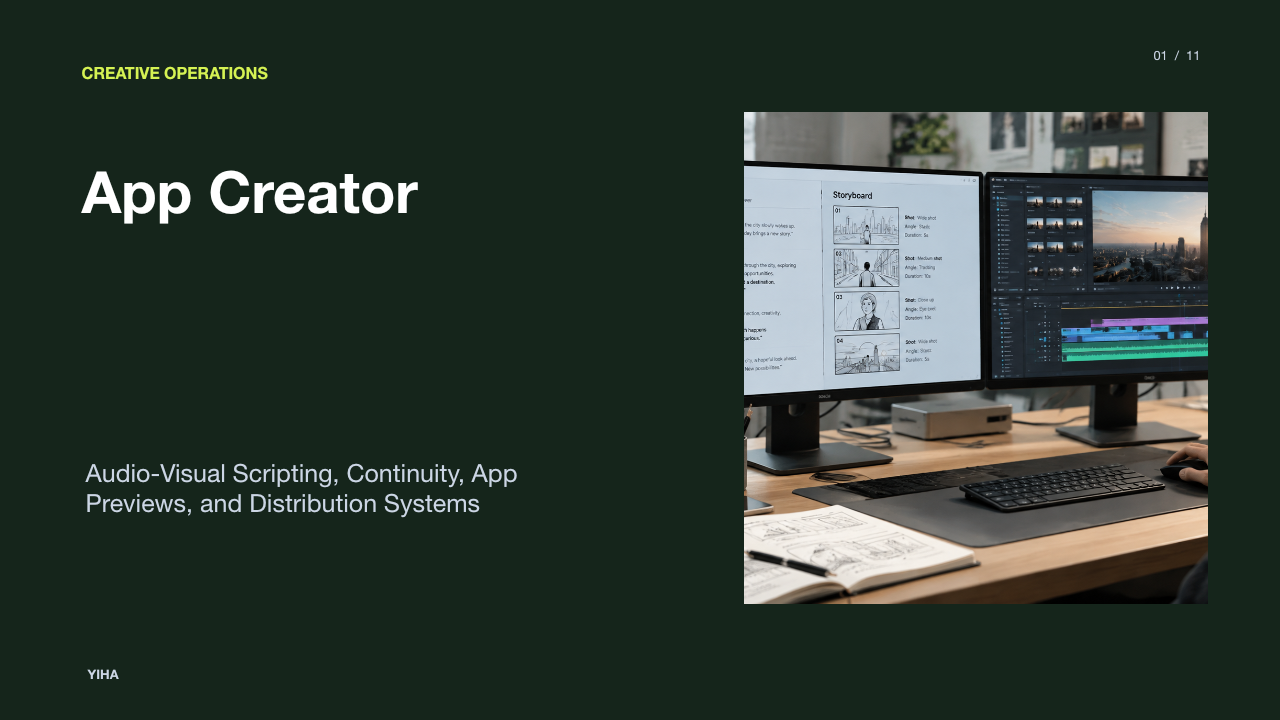
Once a thumbnail sequence successfully resolves narrative continuity and composition, it enters the technical pre-production pipeline. As documented in 10 Best TV Commercial Storyboard Examples in Advertising, validated thumbnails serve as blueprints for shooting boards and animatics. Shooting boards refine rough sketches into precise production documents equipped with technical notes regarding lens choices, camera equipment, visual effects parameters, and lighting schemes.
Simultaneously, thumbnail frames can be imported into digital editing timelines with scratch dialogue, sound effects, and temp music to construct an animatic reel. This translation phase tests temporal rhythm, screen duration, and transition pacing in real time. As discussed in 40 Professional Storyboard Templates & Examples, establishing these scene breakdowns early enables production heads across departments to coordinate schedules, camera rentals, and staging requirements with minimal ambiguity.
Evaluating Sequence Continuity Before Full Production
The final pre-production stage involves auditing the completed board as an unbroken visual sequence. In Storyboard Examples and Templates: A Complete Guide (2026), pre-production practitioners emphasize that the sequence itself is the ultimate deliverable, not any isolated panel. Reading thumbnails horizontally in a continuous strip exposes visual repetition, missing reverse angles, and pacing lulls.
Key review criteria during this final audit include confirming that every emotional story beat receives deliberate visual coverage, verifying consistent screen direction, and ensuring caption annotations accurately detail action, camera movement, and audio cues. By catching staging flaws, redundant coverage, and spatial jumps during low-cost thumbnail reviews, directors and production leads enter active production with a validated shooting blueprint.
Research sources
- Storyboard Examples and Templates: A Complete Guide (2026) | Storyflow · storyflow.so
- What Is a Thumbnail Storyboard? A Clear Guide · scriptlyai.app
- 10 Best TV Commercial Storyboard Examples in Advertising · www.studiobinder.com
- Thumbnail Sketch Guide: Fast Fixes for Broken Sequences · storyboardart.org
- Storyboard Examples Ultimate Guide in 2025 [50+ Examples] · www.studiobinder.com
- Filmmaking Basics/Thumbnail Storyboard/Examples - Wikiversity · en.wikiversity.org
- Thumbnail Storyboard vs. Storyboard: Portfolio Guide · storyboardart.org
- 40 Professional Storyboard Templates & Examples · templatelab.com