Short Film Shot List
A practical guide to building and executing an effective short film shot list, covering technical metadata, coverage strategies, gear documentation, and set scheduling.
Free download · 4.9 MB11 editable slides · PowerPoint format
Download the editable PPTX
PPTX · 4.9 MB · 11 editable slides · Free to edit and reuse with attribution to Yiha.ai
View every slide
Use ← →, Home/End, or swipe on mobile
Every independent short film operates under strict constraints of time, daylight, and physical budget. While a screenplay describes narrative intent and emotional arcs, physical production requires concrete instructions that inform camera, grip, electric, and sound departments exactly where to stand and what to capture. The shot list functions as the central operational bridge between abstract creative vision and physical execution on set. By cataloging framing, camera movement, optical parameters, and setup groupings in advance, filmmakers ensure comprehensive visual coverage while shielding their schedule from costly production overruns.
The Role of the Shot List in Short Film Production
A shot list is a structured production document outlining every individual camera take and perspective required to assemble a film. As detailed by TheGreenshot, a shot list translates artistic vision into an orderable plan, providing the logistical backbone from which the crew works once cameras roll. While directors visualize character relationships and dramatic tension, assistant directors and department heads depend on the shot list to estimate the duration of every sequence and anticipate equipment staging.
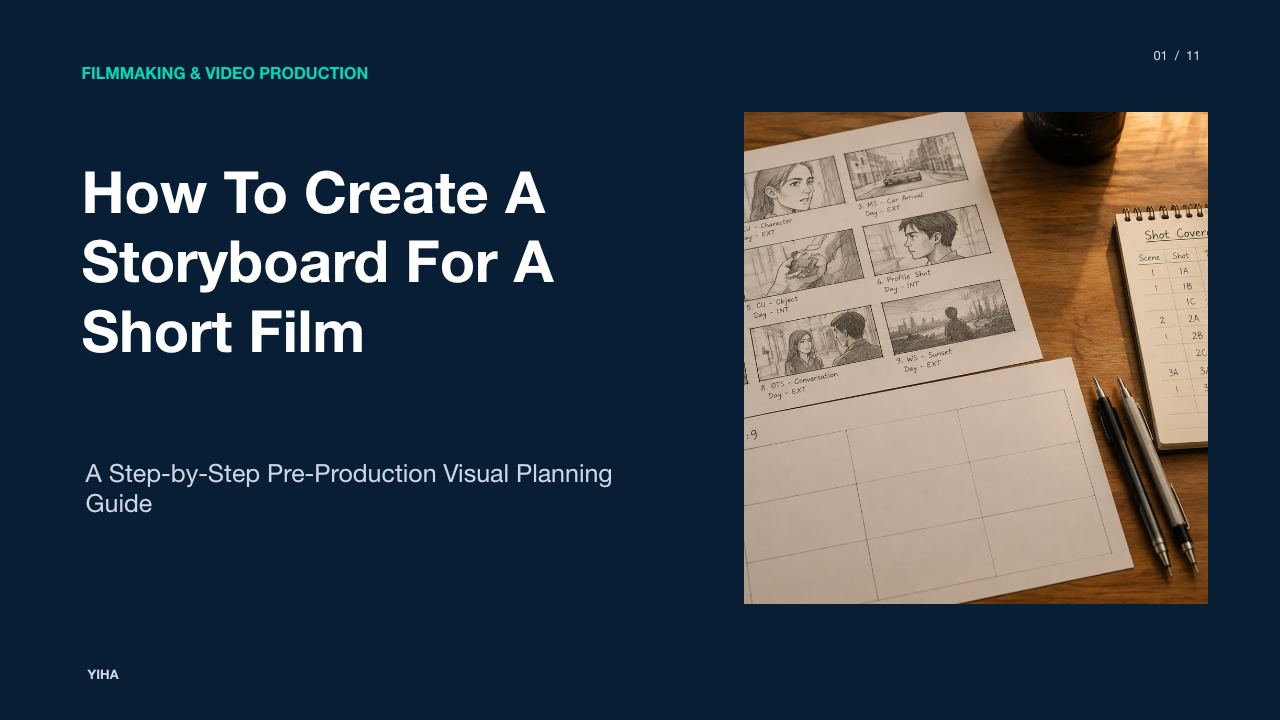
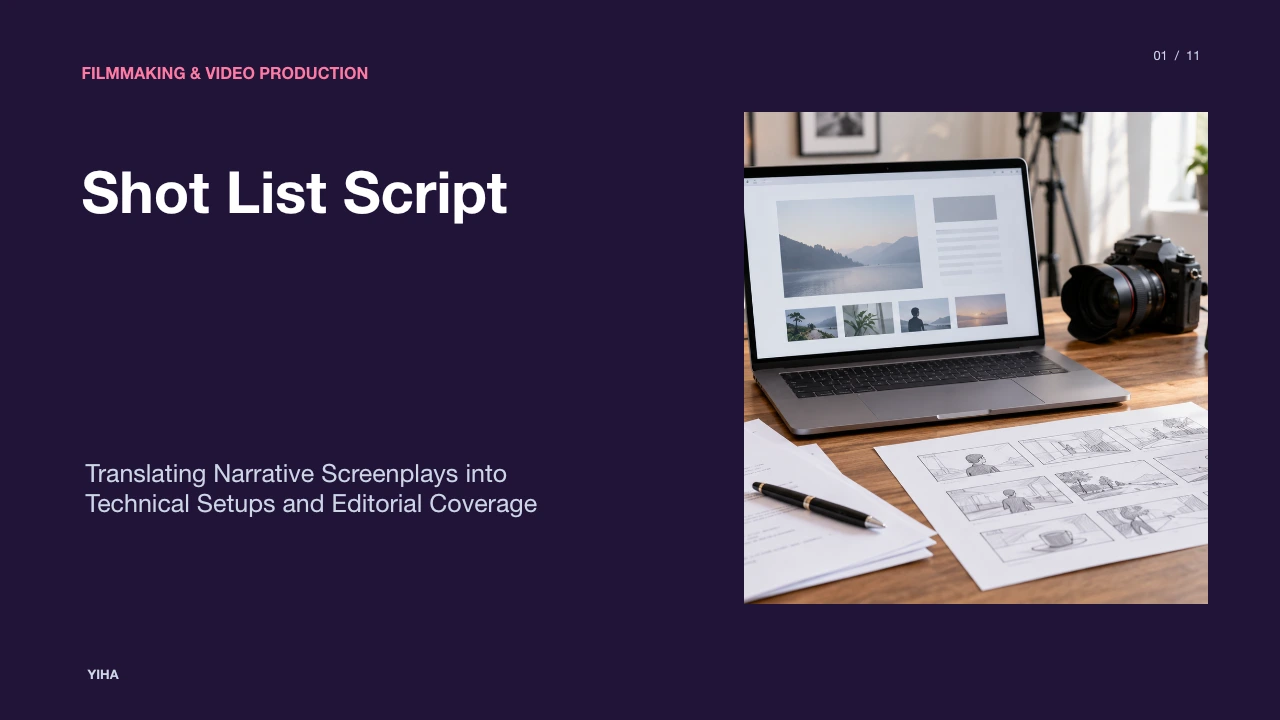
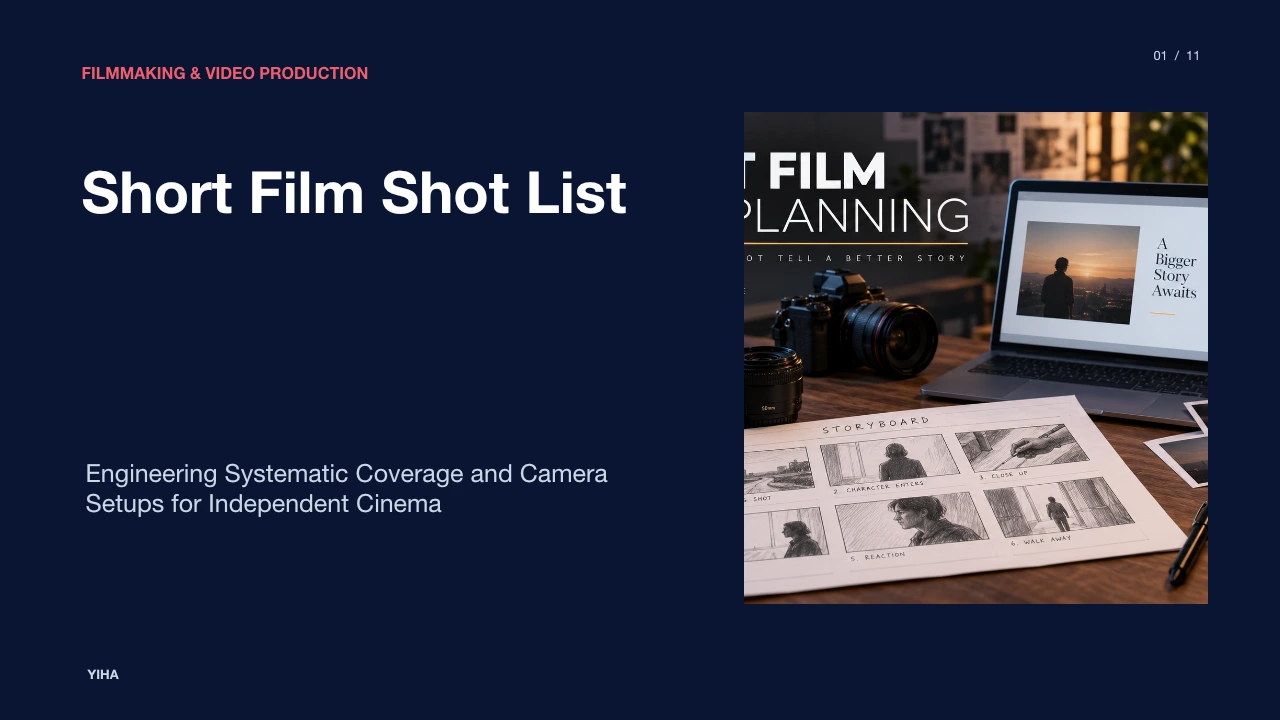
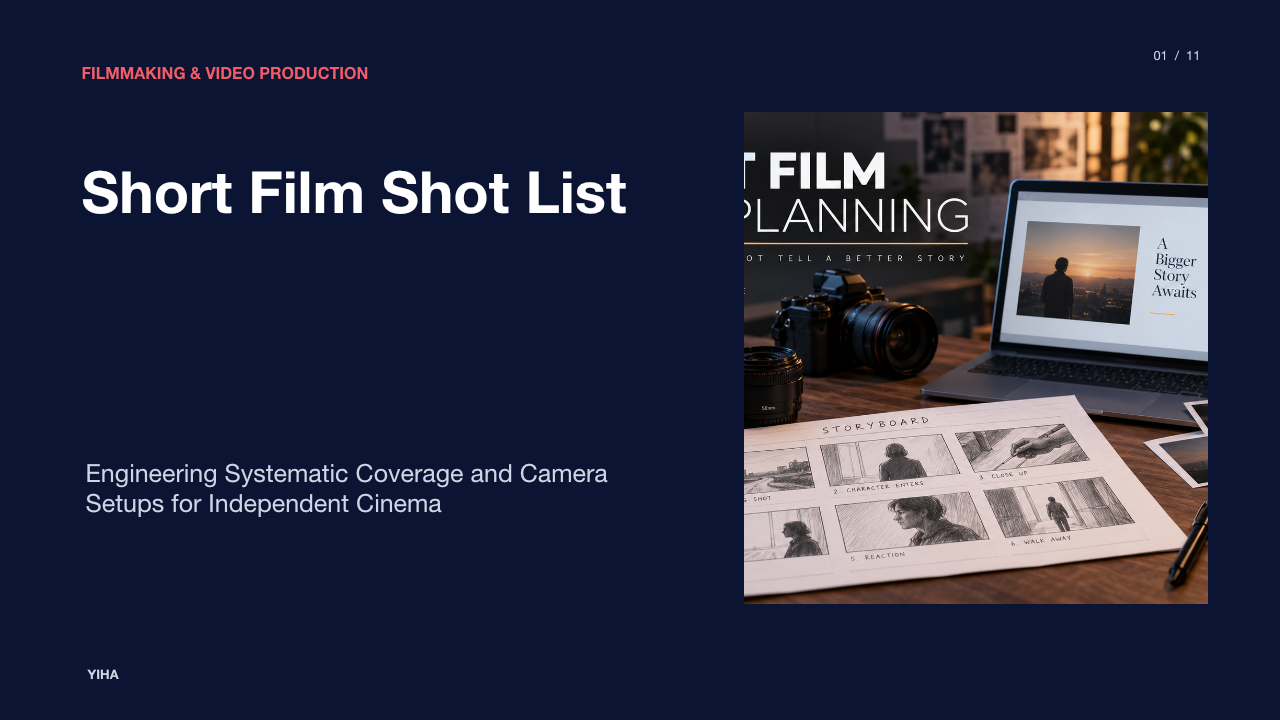
Filmmakers often confuse the distinct responsibilities of the shot list and the storyboard. A storyboard provides an illustrative comic-strip rendering of visual composition and blocking. In contrast, analysis from ShotKraft clarifies that a shot list provides structured technical descriptions detailing how each setup is captured, serving as the immediate operational roadmap for the First Assistant Director (1st AD) and Director of Photography (DP). While a storyboard indicates how an image should appear, the shot list instructs the crew on the mechanical steps necessary to record it. For short films operating on compressed one-day or two-day schedules, a thorough shot list prevents missed coverage and costly reshoots.
Core Data Fields and Technical Camera Specifications
To function effectively across departments, a shot list relies on standardized nomenclature. Industry templates cataloged by Boords emphasize core fields such as scene identifiers, shot numbers, physical locations, and concise narrative descriptions. A standardized row structure ensures that crew members can quickly retrieve key setup specifications without cross-referencing external documents.
Standard technical columns include:
- Scene & Shot Number: Numerical or alphanumeric identifiers (such as Scene 3, Shot 3A) matching the slate clapperboard and script supervisor notes.
- Shot Size / Framing: Precise framing standards, including Wide Shot (WS), Medium Shot (MS), Close-Up (CU), and Extreme Close-Up (ECU).
- Camera Angle: Perspective markers indicating Eye Level, Low Angle, High Angle, Over-the-Shoulder (OTS), or Point-of-View (POV).
- Camera Movement: Kinetic instructions specifying Static, Pan, Tilt, Dolly, Gimbal, Handheld, or Jib moves.
- Lens Choice & Support Gear: Optical focal lengths (such as 24mm, 50mm, or 85mm) and mounting equipment.
As noted by Drawstory, omitting essential technical columns pushes critical decisions onto the shooting day, leading to hesitation and friction that drain valuable daylight hours.
Translating Script Beats into Concrete Visual Units
Transforming narrative literature into visual units requires a systematic script breakdown. Before assigning camera angles, the director and cinematographer examine dramatic action beats, emotional shifts, and audience focal points. Research published by Drawstory shows that a single screenplay page typically yields between 5 and 15 individual shots, depending on pacing and dramatic density.
As outlined in pre-production workflows by WordTemplatesOnline, this translation process begins by marking script beats before generating shot descriptions. Each visual moment where narrative emphasis shifts represents a potential camera setup. As an illustrative example, consider a script scene where an investigator finds an unlocked door: the action transitions from an environmental establishing shot to a medium tracking shot following the character, culminating in an insert close-up of a scratched deadbolt. Documenting these story beats into dedicated list entries ensures that narrative revelations receive deliberate camera emphasis.
Designing Systematic Camera Coverage for Scene Economy
Short film productions rarely have the luxury of shooting endless angles. Independent directors must design systematic coverage patterns that satisfy editorial cutting needs without generating redundant footage. Technical templates from StudioBinder highlight how shot tagging and coverage grouping allow teams to capture every scene perspective while avoiding duplicate setups.
A proven standard for dialogue coverage balances a wider master shot with tighter character angles. In standard scene grammar, a director captures an establishing wide shot, followed by matching over-the-shoulder perspectives, complementary close-ups, and targeted reaction inserts. The Ensemble Docs template incorporates a dedicated "Story Purpose" column alongside shot sizes. Documenting why a shot exists helps directors identify redundant angles during pre-production, preventing over-shooting while safeguarding editorial continuity.
Documenting Camera Movement, Optics, and Gear Requirements
Every decision regarding camera movement and optical focal length carries immediate schedule consequences. According to production documentation from StudioBinder, complex camera movements require extensive setup time, meaning kinetic choices must be deployed deliberately. When a shot list specifies a dolly track or motorized gimbal move, grip and camera crews require advance notice to stage and level physical equipment.
Furthermore, optical choices directly dictate physical turnaround times. Changing a camera lens or swapping filters creates a new setup window. By grouping setups around specific focal lengths (for example, shooting all 35mm wide angles before swapping to an 85mm portrait lens), production crews minimize downtime. Guidelines provided by TheGreenshot point out that listing specific lens choices (such as 24mm or 50mm) directly informs the 1st AC and DP, ensuring optical packages remain staged and ready before actors complete blocking rehearsals.
Optimizing the Shooting Schedule Around Camera Setups
Filming scenes in chronological script order is one of the most common logistical errors in amateur filmmaking. On set, major lighting turnarounds and camera position changes consume significant crew labor. Practical scheduling guidance from TheGreenshot stresses that shot lists must be reordered by physical camera setup and lighting direction rather than narrative sequence.
When a scene involves two actors facing each other across a table, shooting chronologically requires repeatedly turning lights, flags, and monitors back and forth. Additional production analysis from TheGreenshot demonstrates that grouping all shots sharing a single camera orientation into one setup block eliminates repetitive relighting. Efficient productions shoot every shot directed toward Actor A (wide master, over-the-shoulder, and close-up) under a single lighting setup. Once those setups are recorded, the crew executes a single major lighting turnaround to capture all matching angles facing Actor B. Grouping shots by physical orientation preserves precious crew energy and prevents running out of time.
Cross-Department Communication and Production Logistics
While the shot list is created by the director and DP, its utility spans the entire production team. Analysis by SpreadsheetDaddy demonstrates that comprehensive templates include logistics columns for location details, actor assignments, sound requirements, and required hand props, giving all departments visibility into upcoming takes.
A clear shot list coordinates multiple specialized roles:
- First Assistant Director (1st AD): Evaluates setup complexity and monitors pace against the call sheet.
- Sound Recordist / Boom Operator: Anticipates wide shots that require hidden plant microphones or wireless lavaliers, transitioning to boom mics on tight singles.
- Production Designer & Props Master: Ensures specific hand props and set dressings are dressed in frame before camera rolls.
- Gaffer & Key Grip: Pre-rigs lighting instruments for subsequent camera angles while the current setup is filming.
As reinforced by Boords, collaborative planning prevents overlapping tasks and ensures that the entire crew operates from a single up-to-date plan, avoiding unforced production pauses.
Time Allocation, Setup Formulas, and Priority Triage
To construct a defensible schedule, independent filmmakers must apply realistic time estimations to every planned shot. As noted in documentation by Ensemble Docs, summing estimated minutes per shot allows productions to verify the feasibility of a full shoot day. In indie short filmmaking, realistic estimates account for lighting adjustment, camera alignment, sound checks, actor rehearsal, and multiple takes.
Pre-production resources from WordTemplatesOnline highlight that shot lists should incorporate priority status markers. Scheduling models often categorize shots by priority tiers:
- Critical (Must-Have): Fundamental story beats and baseline coverage without which the scene cannot cut together.
- Important (Value-Add): Tighter character close-ups and dynamic camera moves that elevate dramatic nuance.
- Optional (Bonus): Stylized macro inserts, ambient cutaways, or high-speed visual flourishes.
If unpredictable weather or equipment delays consume production hours, the director and 1st AD can quickly triage the remaining schedule. By dropping optional inserts and preserving critical coverage, the team protects the narrative spine without sacrificing project completion.
Formats, Digital Tools, and Adapting the Plan On Set
Filmmakers manage shot lists through a variety of formats, from simple collaborative spreadsheets to specialized cloud software. Resources from Seikan emphasize that effective software tools support dual operational views: script order for pre-production narrative planning, and setup order for physical execution on the floor. While spreadsheets built in Google Sheets allow quick collaborative editing across departments, specialized platforms link directly to script pages and digital storyboards.
Regardless of software format, filmmakers must maintain disciplined adaptability once production begins. As emphasized in production guides by TheGreenshot, a shot list is a flexible operational guide rather than an unyielding contract. If an actor discovers organic blocking during set rehearsals that consolidates two separate angles into a single dynamic two-shot, the director should embrace the improvement. The disciplined shot list establishes an organized framework that grants filmmakers the freedom to innovate without losing control of their schedule.
Research sources
- FREE Film Shot List Template and Examples | Free Software · www.studiobinder.com
- Shot List Template: Complete Guide for Filming · www.thegreenshot.io
- How to Make a Shot List for a Film: The Complete Guide · www.shotkraft.com
- Free Shot List Template (2026 Guide) | Boords · boords.com
- Shot List Template: Step-by-Step Guide for Filmmakers · www.drawstory.ai
- Free Shot List Templates for Production (Word, PDF) · www.wordtemplatesonline.net
- Free Shot List Template for Film (CSV) — Ensemble Docs · ensemblewriter.com
- Shot List Template — Free Download for Film & TV ((2026)) · www.studiobinder.com
- What Is a Shot List? Film Production Guide · www.thegreenshot.io
- Free☝️ Shot List Template (Google Sheets, Excel, & PDF Downloads) · spreadsheetdaddy.com
- Shot List Template Guide: Fields, Formats & Examples (2026) | Seikan · seikan.app