Script
A complete guide to industry-standard script formats, exploring how typography, sluglines, step outlines, and production drafts turn narrative ideas into actionable blueprints for filmmakers.
Free download · 4.9 MB11 editable slides · PowerPoint format
Download the editable PPTX
PPTX · 4.9 MB · 11 editable slides · Free to edit and reuse with attribution to Yiha.ai
View every slide
Use ← →, Home/End, or swipe on mobile
A dramatic script functions as both a literary narrative and an operational construction blueprint, as explained by Celtx. Unlike prose literature, where an author commands page geometry and descriptive pacing without external industrial constraints, dramatic media operates within strict typographic and structural boundaries Celtx. Every spacing parameter, indentation, and capitalization pattern communicates distinct instructions across multiple creative and technical departments Celtx. Understanding how a script template organizes temporal pacing, scene transitions, and production assets allows writers and directors to translate narrative concepts into executable film, television, audio, and stage projects DramaSo.
Why dramatic media relies on standardized script formats
Theatrical motion pictures and episodic television programs require precise coordination across hundreds of craftspeople, including cinematographers, set builders, costume supervisors, and sound recordists Celtx. According to industry analysis by Celtx, movie script formatting exists not for aesthetic decoration but for operational function. When a script adheres to industry conventions, directors can visualize scene flow, pacing, and tone, while department heads can extract relevant mechanical tasks without ambiguity Celtx.
The foundational heuristic of the screen industry is that one page of a properly formatted screenplay corresponds roughly to one minute of screen time Celtx. This temporal ratio allows producers to gauge runtimes and preliminary financial requirements directly from the page count Celtx. If formatting drifts from standard parameters, runtime projections become unreliable Celtx. A bloated or improperly formatted script can mislead producers into thinking a project is longer or more expensive than it actually is Celtx. In addition, as DramaSo notes, industry readers evaluate formatting immediately. Adhering to standard layouts establishes professional credibility on page one DramaSo.
The core anatomy of a standard master scene script
A standard master scene script comprises distinct structural units that direct visual and auditory attention DramaSo. As documented by DramaSo, the master layout organizes pages using standard components: scene headings, action descriptions, character cues, dialogue blocks, parentheticals, and cut transitions. Each element carries an established visual footprint so readers can scan between character speech and physical action effortlessly DramaSo.
Scene headings, or sluglines, mark changes in location or time Celtx. According to Celtx, sluglines establish whether an environment is an interior (INT.) or exterior (EXT.), identify the specific setting, and indicate temporal markers such as DAY or NIGHT. Action blocks follow immediately beneath, composed in present tense to depict only visible motion and audible sounds DramaSo. Character names appear capitalized above spoken lines, which sit centered on the page Celtx. Parentheticals provide brief performance guidance within a dialogue block, though writers use them sparingly to indicate delivery Celtx. Furthermore, when two scenes occur simultaneously, such as during telephone conversations, writers employ conventions like INTERCUT to avoid duplicate sluglines Celtx.
Typography and margins as temporal and physical rulers
The mechanics of the one-page-per-minute heuristic depend on precise typographical constraints Celtx. Professional screenplays require a 12-point monospaced font, historically Courier, because every glyph occupies identical horizontal width Celtx. According to Celtx, Courier 12-point maintains predictable line lengths across diverse vocabularies, ensuring that line breaks remain consistent across authors.
Margin parameters reinforce this mechanical measurement DramaSo. Spec scripts require a 1.5-inch left margin alongside distinct spec margins, as detailed by DramaSo. As an operational recommendation, the wide left margin provides necessary clearance after pages are hole-punched and secured with physical brass brads, preventing text from disappearing into the binding. Dialogue blocks are indented within a distinct column of approximately 3.5 inches DramaSo. This layout creates a calculated balance between action density and speech pacing, maintaining the physical page density that preserves runtime estimations, as affirmed by Celtx and DramaSo.
Story architecture: beat sheets and step outlines
Before entering draft formatting, narrative development requires structural planning frameworks StudioBinder. Workflows outlined by StudioBinder emphasize using beat sheets and step outlines to map cause-and-effect relationships before generating dialogue. A beat sheet tracks major thematic turns and character emotional milestones across a multi-act progression StudioBinder.
A step outline expands these high-level story beats into an inventory of sequential scenes StudioBinder. Writers define scene objectives, active obstacles, and specific outcomes for each sequence StudioBinder. StudioBinder highlights concrete industry examples: screenwriter Tony Gilroy has described utilizing outlines spanning 30 to 80 pages to prepare stories, while screenwriter John August created sequence outlines following initial drafts to evaluate balance across narrative worlds StudioBinder. As DramaSo demonstrates, beat sheets provide structural time windows that test pacing before a writer commits scenes to final script formatting DramaSo.
Format differences across film, stage plays, and television
While single-camera feature screenplays and television scripts follow the master scene convention, alternative narrative media employ distinct layout standards suited to their performance environments DramaSo. Single-camera spec scripts utilize Hollywood standard margins, sluglines, and centered dialogue columns DramaSo. In contrast, theatrical stage writing adheres to conventions detailed by DramaSo, where character names remain capitalized and centered, dialogue spans full margin widths, and stage directions sit bracketed in parentheses.
Theatrical layouts also incorporate formal act divisions, scene headers, and dedicated setting blocks such as AT RISE descriptions that establish initial stage geometry DramaSo. These format divergences arise from functional production demands: theater actors and stage managers require wide margins across full-width dialogue for handwritten rehearsal blocking notes, whereas screen directors rely on master scene white space to evaluate shot pacing and visual scene transitions Celtx DramaSo. In addition, short-form mobile vertical episodes utilize dedicated beat sheets tailored to phone-first viewing rather than stage or theatrical projection DramaSo.
Speculative scripts versus locked production drafts
A critical operational distinction exists between speculative (spec) scripts and locked shooting scripts Celtx. As Celtx notes, spec scripts represent lean, clean reading drafts crafted to sell stories to studio executives, producers, or talent agents. Consequently, spec scripts deliberately omit camera technicalities, scene numbering, and production notes that clutter narrative momentum Celtx.
Once a screenplay is financed and enters physical pre-production, it converts into a shooting draft Celtx. As explained by Celtx, shooting scripts incorporate scene numbers and camera angles. These production markers enable assistant directors and unit managers to create essential logistical assets DramaSo. As documented by DramaSo, production teams generate per-scene script breakdown sheets covering standard element categories, as well as shooting schedules and daily call sheets that track scenes, sets, cast, page counts, and call times DramaSo.
Specialized templates for audio drama and short-form video
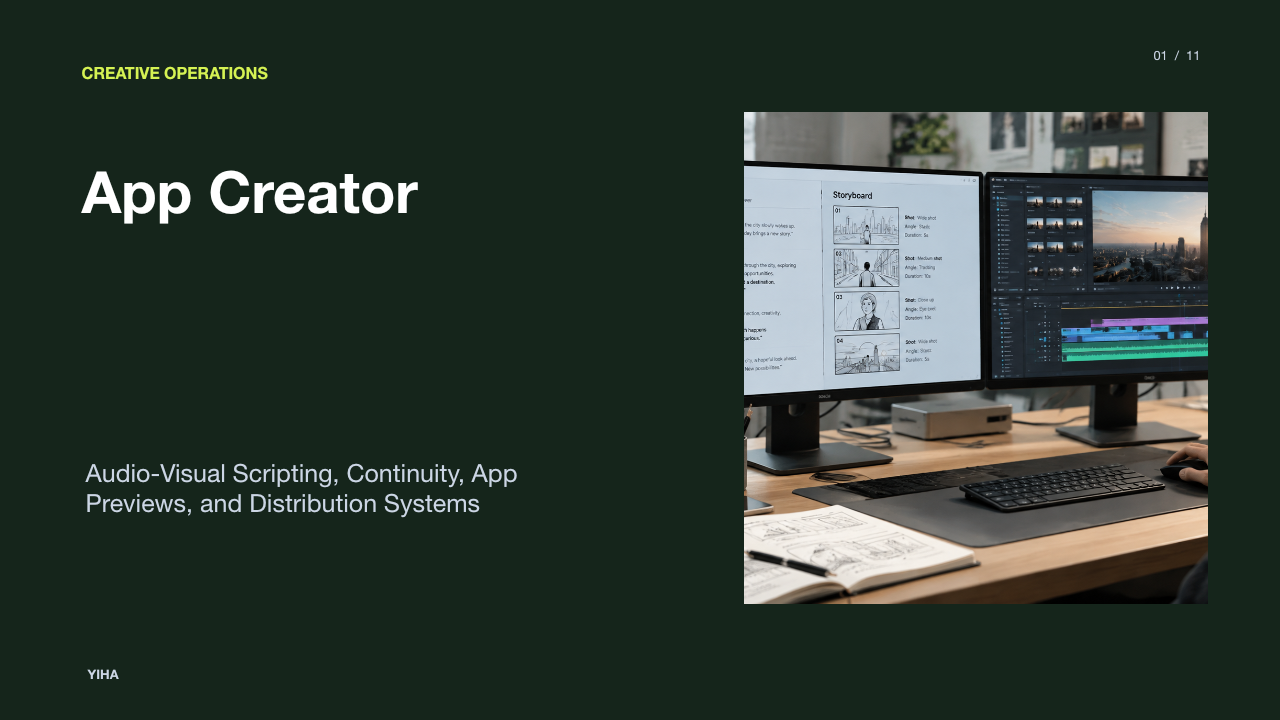
Outside traditional long-form drama, production teams rely on specialized templates tailored to distinctive delivery formats StudioBinder DramaSo. Commercial spots, corporate explainers, music videos, and documentaries frequently employ two-column Audio/Visual (A/V) templates StudioBinder. According to StudioBinder, two-column formats segregate sound elements in the left column, including dialogue, music cues, and sound effects labeled with SFX. The right column details synchronized visual camera instructions, shot sizes, camera angles, camera movements, and character actions StudioBinder.
Emerging vertical formats introduce further adjustments for mobile screens DramaSo. As documented by DramaSo, short-form mobile vertical episodes utilize structured beat sheets organized around rapid pacing windows. These templates outline specific timing targets for 60-to-90-second episodes, structuring scenes across five core beats: a hook delivered within the opening three seconds, followed by setup, conflict, escalation, and a concluding cliffhanger DramaSo. This structure ensures that visual and auditory cues align with phone-first consumption DramaSo.
Common layout traps, camera directions, and unfilmable text
Amateur scripts frequently encounter immediate reader rejection due to recognizable layout errors Celtx DramaSo. One frequent issue highlighted by Celtx is the over-direction of the camera. Novice writers often insert explicit technical instructions such as CLOSE ON or POV. Celtx advises that screenwriters should avoid directing the camera unless strictly crucial, leaving camera choices to the director in order to avoid creating logistical headaches for production crews Celtx.
Another significant flaw involves authoring unfilmable interior exposition Celtx. When writers describe internal thoughts, psychological motivations, or backstories that cannot be perceived by an audience, they write novelistic prose that actors and cinematographers cannot physically record Celtx. Professional action blocks depict strictly observable physical events and sounds DramaSo. Furthermore, writers must avoid dense blocks of unbroken descriptive text, keeping action descriptions compressed into readable chunks that mirror visual screen pacing Celtx.
Integrating script software and production pipeline standards
Maintaining rigorous typographical standards manually within standard word processors is labor-intensive and prone to human error Celtx. Modern productions utilize specialized scriptwriting tools Celtx. As Celtx notes, software platforms like Celtx, Final Draft, Fade In, and WriterDuet automatically apply standard margins, tab stops, and capitalization rules using hotkeys, removing guesswork for writers Celtx.
Beyond basic text editing, industry software connects script content directly into pre-production workflows Celtx. Scene headings, character cues, and action blocks export directly into breakdown sheets, scheduling calendars, and production budgets Celtx DramaSo. Furthermore, as shown by DramaSo, standardized templates export clean, print-ready PDF files formatted for standard US Letter or A4 paper. These standard exports guarantee that casting agencies, financiers, and production crews experience uniform pagination and temporal pacing across any physical binder or digital screen Celtx DramaSo.
Research sources
- SharePoint site template and site script overview | Microsoft Learn · learn.microsoft.com
- Movie Script Format: Complete Guide (With Free Template) - Celtx Blog · blog.celtx.com
- Download a Free Script Template PDF â Screenplay, Stage Play & Vertical | DramaSo · drama.so
- How to Write a Script Outline for Film and TV [FREE Template & Example] · www.studiobinder.com
- Video Script Template — Example and Guide · www.studiobinder.com