Objectives For Storytelling Lesson Plan
A comprehensive guide to designing clear, standards-aligned learning objectives for storytelling lesson plans across oral and written literacy instruction.
Free download · 4.9 MB11 editable slides · PowerPoint format
Download the editable PPTX
PPTX · 4.9 MB · 11 editable slides · Free to edit and reuse with attribution to Yiha.ai
View every slide
Use ← →, Home/End, or swipe on mobile
Storytelling holds an enduring place in human culture and classroom practice, yet in instructional settings it frequently risks becoming an unstructured filler activity. Without intentional targets, classroom narratives can entertain students while failing to build lasting linguistic, critical, or creative competence. Establishing rigorous learning objectives transforms storytelling into a disciplined instrument for language acquisition, character analysis, and rhetorical mastery.
Effective lesson design requires translating broad storytelling intentions into observable student behaviors. By anchoring narrative instruction in cognitive taxonomies, structured objective models, and developmental benchmarks, educators ensure that creative expression directly supports academic growth and standard curricular goals.
The Purpose of Narrative Learning Objectives
Classroom storytelling without clear objectives often deteriorates into passive listening or open-ended conversations without measurable outcomes. When narrative activities lack intentional alignment, educators cannot reliably assess whether students have deepened their analytical abilities, grasped sequence and conflict, or expanded their oral vocabulary. Intentional targets provide a benchmark that guides teacher feedback, informs differentiated support, and prompts student self-reflection.
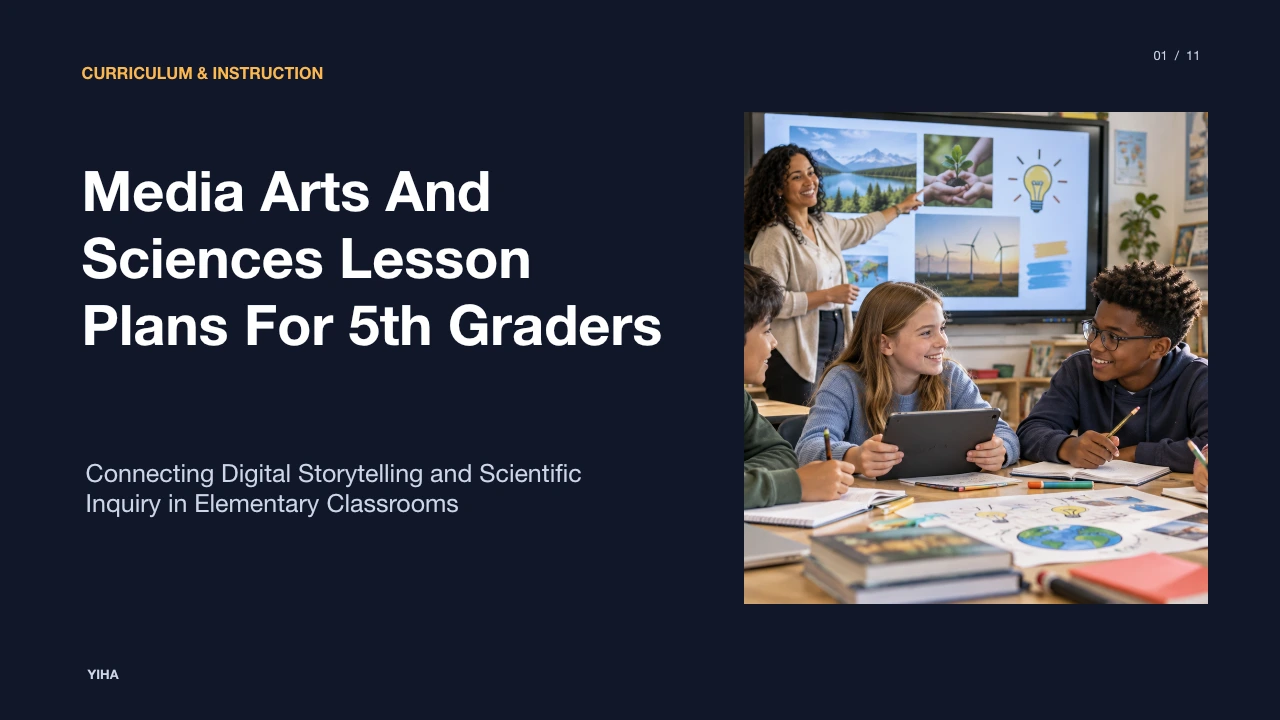
Curricular frameworks treat story as an essential cognitive and communicative practice rather than an isolated entertainment segment. According to the Teaching Storytelling Position Statement from the National Council of Teachers of English (NCTE), storytelling serves as a central meaning-making tool in schools. The NCTE committee highlights that when learners engage in language-filled environments, evaluate example stories, and craft their own narratives, they produce sophisticated ideas and offer meaningful commentary to peers during prolonged classroom interactions. Defining explicit objectives ensures that teachers do not leave these outcomes to chance. Instead, well-crafted learning goals focus student attention on specific narrative elements, such as sequencing, character motivation, and thematic cohesion, turning an enjoyable creative exercise into structured inquiry.
Cognitive Framing Through Bloom's Taxonomy
A frequent weakness in narrative lesson plans is the reliance on unmeasurable verbs. Statements such as "students will understand narrative arcs" or "students will appreciate folk tales" obscure what learners must actually execute in the classroom. Using Bloom's revised taxonomy enables teachers to shift from vague internal states to demonstrable cognitive behaviors across six cognitive tiers: remembering, understanding, applying, analyzing, evaluating, and creating.
As explained in Lesson Plan Objectives: Free ABCD Builder & Examples, an instructional objective must be observable and measurable; if an educator cannot score the performance, the objective requires revision. Lorin Anderson and David Krathwohl's revised framework organizes these behaviors into actionable categories. In an introductory storytelling unit, foundational objectives might require students to recall narrative sequence or explain character decisions. Intermediate lessons advance to analysis, where students deconstruct how specific obstacles heighten narrative tension. Advanced lessons challenge students to evaluate differing character viewpoints or synthesize original tales under strict thematic constraints. Framing objectives with Bloom's action verbs guarantees that the resulting classroom artifact, whether a Venn diagram, an annotated transcript, or an oral monologue, provides direct evidence of student thinking.
Operationalizing Goals with the ABCD Model
To translate broad curricular standards into precise lesson targets, instructional designers apply the ABCD model. This framework breaks an objective into four clear components:
- Audience: Identifies the specific learners completing the task.
- Behavior: Names the observable, measurable action verb.
- Condition: Specifies the setting, materials, tools, or constraints provided during the task.
- Degree: Defines the criterion for acceptable mastery, such as accuracy thresholds or rubric indicators.
Guidance on lesson planning from 9 Components of an Effective Lesson Plan - Teacher Strategies emphasizes that measurable objectives establish precise destinations, shifting instruction away from generic aspirations toward clear behavioral demonstrations. Illustrative example: Given a three-part plot graphic organizer (Condition), Grade 5 students (Audience) will outline an original personal narrative (Behavior) that includes an exposition, a complication, and a resolution meeting all four criteria on the classroom narrative rubric (Degree). Structuring targets this way prevents instructional drift and makes expectations transparent to learners.
Operationalizing goals through the ABCD framework also clarifies what instructional materials the teacher must provide. If the condition specifies visual prompt cards or a graphic organizer, the lesson sequence must incorporate direct instruction on how to navigate those tools before independent student production begins.
Linguistic and Neurological Evidence for Storytelling
Storytelling instruction is grounded in cognitive science and language acquisition research. Cognitive researchers have observed neural coupling during oral communication, where brain activity in listeners mirrors patterns in the speaker as narrative comprehension unfolds. Because human cognition naturally organizes experiences through sequential cause-and-effect structures, narratives offer an exceptionally efficient vehicle for language processing and memory retention.
In second-language acquisition, storytelling delivers contextualized comprehensible input. As highlighted in Storytelling in ESL: 10 Best Activities + Lesson Plan, narrative structures naturally contextualize grammatical forms, such as alternating between the past continuous to establish background setting and the simple past to indicate disruptive plot events. Instead of memorizing isolated grammar worksheets or vocabulary lists, students encounter and apply words within emotionally grounded, consequential story contexts. When a lesson objective asks a student to retell a scenario or explain a character conflict, the learner must retrieve and apply target syntax to maintain the sequence of events. Objectives that target narrative retellings, scene recreations, and spoken summaries directly reinforce these cognitive mechanisms and produce higher expressive fluency than decontextualized drills.
Core Story Elements and Structural Milestones
A comprehensive storytelling lesson plan targets discrete milestones within narrative architecture. Novice storytellers often produce disjointed episodes that lack causality or resolution. Curriculum objectives must guide students to master core components: establishing settings, defining clear character objectives, staging escalating obstacles, and concluding with coherent resolutions.
Practical narrative models, such as the sequence outlined in Creative Writing & Storytelling Lesson Plan: Turn Real Places into Amazing Stories / Learning Corner, demonstrate how real-world observations can be structured through brainstorming, narrative skeletons, and sensory expansion. Students first generate premise ideas using what-if prompts, draft a beginning, middle, and end outline, and then enrich the narrative with sensory language. Similarly, dramatic storytelling curricula documented in the Indigenous Storytelling Unit: 6-Lesson Drama Unit | DTA demonstrate that students must analyze character motivations and relationships by connecting background traits with observable actions on a plot graph. Objectives should isolate these milestones sequentially, ensuring learners move from basic chronology toward nuanced dramatic pacing and deliberate thematic expression.
Balancing Oral Performance and Written Composition
Storytelling encompasses both vocal performance and written composition, each requiring distinct objective criteria. Written narrative instruction concentrates on conventions such as orthography, descriptive mechanics, sentence variety, and paragraph structure. In contrast, oral storytelling highlights oracy, requiring students to regulate vocal inflection, pacing, volume, eye contact, and physical gesture.
Confusing these two modalities compromises assessment accuracy. Assessing an oral performance solely by written grammar standards ignores physical and vocal expression. Conversely, evaluating written drafts without verifying narrative pacing or internal structure overlooks essential composition competencies. According to the Teaching Storytelling Position Statement, oral narrative interactions give learners regular opportunities to test out sophisticated concepts in live peer exchanges. Objective writers must separate oracy benchmarks from text-based writing goals, crafting separate rubrics for vocal performance and written drafts. When a lesson plan includes both oral and written components, the educator should define distinct objectives for each phase, such as outlining the plot skeleton in writing before executing the expressive oral retelling.
Preventing Common Objective Pitfalls and Biases
Several common pitfalls undermine storytelling objectives. The most pervasive error is mistaking classroom activities for learning outcomes. Writing "students will participate in an oral storytelling circle" describes an instructional activity, not what students learn. The objective must state what students accomplish during the circle, such as articulating an internal conflict using specific character dialogue.
Another frequent issue is evaluation bias, where teachers evaluate subjective literary taste rather than demonstrable criteria. Unfocused rubrics often penalize non-linear or culturally specific storytelling structures. As noted in the Indigenous Storytelling Unit: 6-Lesson Drama Unit | DTA, educators should examine cultural perspectives and contexts that influence dramatic work, ensuring that traditional European narrative arcs are not treated as universal standards. Furthermore, 9 Components of an Effective Lesson Plan - Teacher Strategies highlights the need for clear criteria aligned with learning goals to keep assessment objective and reliable. Setting transparent expectations protects diverse student voices from arbitrary grading and validates varied storytelling traditions.
Scaffolded Instructional Delivery and Differentiation
Rigorous objectives require structured scaffolding to ensure that all students achieve mastery. The gradual release of responsibility model ("I Do, We Do, You Do") provides a proven sequence for narrative instruction. The teacher models a narrative skill, leads the group in collaborative co-creation, and finally transitions students into independent drafting or performance.
Scaffolding techniques described in Storytelling in ESL: 10 Best Activities + Lesson Plan illustrate how structured tasks support diverse learners. Strategies such as chained storytelling, picture sequencing, and word-removal retellings lower the cognitive load for emergent bilinguals and struggling speakers while preserving high expectations. For instance, pairing visual image sequences with oral sentence starters allows students to practice narrative pacing without getting bogged down by spelling mechanics. Similarly, Creative Writing & Storytelling Lesson Plan: Turn Real Places into Amazing Stories / Learning Corner illustrates how students can move from a basic story skeleton to adding sensory sparkle before attempting a full performance. Differentiated objectives permit students to demonstrate narrative comprehension through varied modalities, such as arranging visual storyboard cards, dictating dialogue, or composing extended prose, ensuring accessibility across readiness levels.
Systemic Alignment and Long-Term Literacy Assessment
Individual storytelling lessons should not function as isolated experiences. Instead, they should align vertically across unit progressions and grade levels, connecting foundational oral retellings in early grades to sophisticated thematic composition in secondary education. Effective curriculum mapping links daily objectives to broader state or national literacy standards.
As highlighted in 10 Lesson Plan Examples, Plus Helpful Expert Tips, educators should use backward design frameworks, determining desired outcomes and assessment evidence before planning day-to-day exercises. Teachers should identify what mastery looks like before selecting engaging narrative prompts. Integrating ongoing formative checks, such as quick partner retellings, visual exit tickets, or peer critique protocols, allows instructors to monitor progress toward the objective in real time. According to Lesson Plan Objectives: Free ABCD Builder & Examples, aligning short-term lesson objectives with multi-year learning goals ensures that creative exercises continuously reinforce core reading comprehension and composition standards. When narrative targets connect systematically to longitudinal literacy benchmarks, storytelling serves as an enduring engine for academic achievement.
Research sources
- ERIC - ED627704 - Teaching Storytelling Position Statement. Position Statements, National Council of Teachers of English, 2022-Dec-1 · eric.ed.gov
- Free AI Lesson Plan Generator for Teachers · www.theschoolhouse.org
- Creative Writing & Storytelling Lesson Plan: Turn Real Places into Amazing Stories / Learning Corner · learningcorner.co
- Lesson Plan Objectives: Free ABCD Builder & Examples · draftmylesson.com
- Indigenous Storytelling Unit: 6-Lesson Drama Unit | DTA · www.theatrefolk.com
- 9 Components of an Effective Lesson Plan - Teacher Strategies · www.teacherstrategies.org
- Storytelling in ESL: 10 Best Activities + Lesson Plan · tahricteaches.com
- 10 Lesson Plan Examples, Plus Helpful Expert Tips · www.weareteachers.com